VEHICLE FIRE SUPPRESSION SYSTEM About
Fast, Automatic Fire ResponseThe suppression system rapidly detects fires within 5-10 seconds through heat-sensitive tubing or thermal sensors, instantly triggering the release of extinguishing agents. This swift action minimizes equipment downtime and reduces the risk of severe fire damage, ensuring operational continuity.
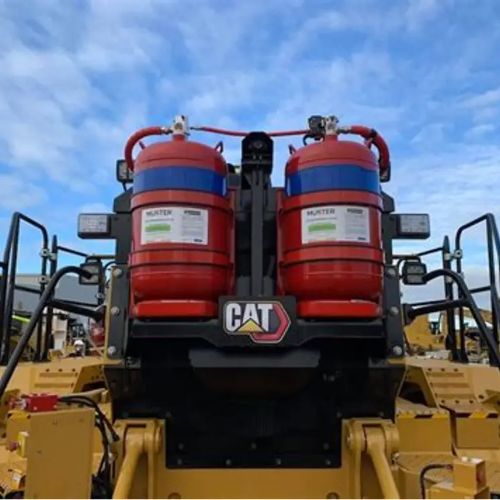
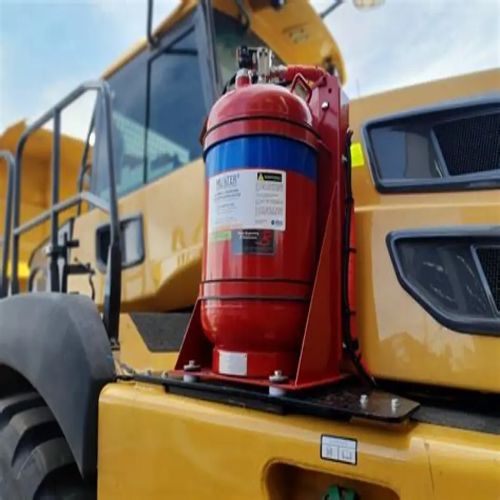
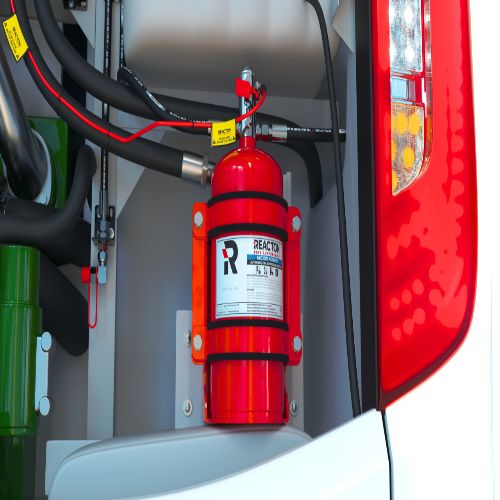
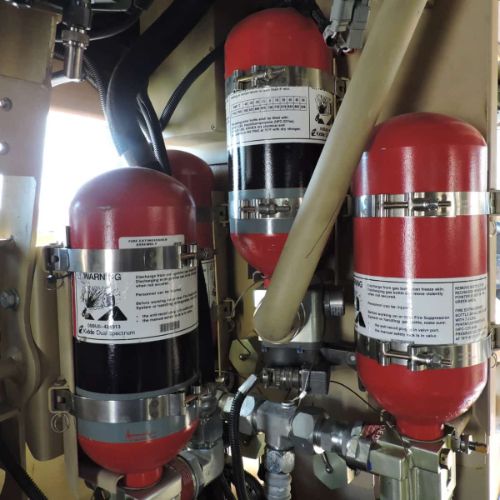
Versatile and Reliable DesignEngineered with refillable and rechargeable cylinders, the system is adaptable to different vehicle sizes (from 5 kg to 25 kg) and can be mounted via sturdy brackets. All systems are UV, water, and dust resistant, making them ideal for challenging environments and robust daily use.
Certified Safety and Easy MaintenanceFully compliant with IS, EN, or UL standards and offering a recommended 12-month service interval, maintenance is straightforward. Audio-visual alarms provide immediate warnings, and color-coded labels clearly indicate the agent type for rapid identification during inspections.
FAQ's of VEHICLE FIRE SUPPRESSION SYSTEM:
Q: How does the Vehicle Fire Suppression System detect and suppress fires?
A: The system uses a fire detection tube or thermal sensors to identify fire or excessive heat in the protected compartment. Upon detection (within 5-10 seconds), it automatically releases the extinguishing agent through stainless steel nozzles, quickly suppressing the fire. There is also a manual release option for emergencies.
Q: What types of vehicles is this fire suppression system compatible with?
A: This system is designed for a range of heavy vehicles, including excavators, loaders, dump trucks, bulldozers, and haul trucks. Its modular configuration ensures precise protection based on vehicle compartment sizes.
Q: When should the system be serviced, and what does maintenance involve?
A: A routine service interval of 12 months is recommended. Maintenance typically includes checking the pressure, inspecting system components for damage or tampering, verifying the alarm functionality, and refilling or recharging the cylinder if necessary.
Q: Where should the system be installed on a vehicle?
A: Installation is generally fixed and tailored to critical areas prone to fire risk, such as engine bays or hydraulic compartments. The system is mounted on the vehicle using robust brackets, with nozzle and detection tube placement based on the vehicle's layout.
Q: What agent types are available and how do I choose the right one?
A: The system supports ABC dry powder, AFFF foam, or clean agent. Choice depends on the primary fire risks your vehicle faces: dry powder is versatile, AFFF foam is ideal for liquid fires, and clean agents are best for sensitive electronics. Labels indicate the agent type for easy identification.
Q: How does the alarm system work upon fire detection?
A: Upon activation, the onboard audio-visual alarm notifies operators and nearby personnel immediately, helping ensure swift evacuation and fire department response if required. The alarm system is powered by 12V or 24V from the vehicle's electrical system.
Q: What are the main benefits of using this fire suppression system?
A: Key benefits include rapid fire detection and suppression, high reliability, low maintenance, compatibility with multiple vehicle types, and strong resistance to environmental hazards such as water, dust, UV, and corrosion. These features enhance both safety and equipment longevity.

 Send Inquiry
  Call Us 07971670816


 Send Inquiry




 Send Inquiry
 Send Inquiry
 Send SMS


 English
 Spanish
 French
 German
 Italian
 Chinese (Simplified)
 Japanese
 Korean
 Arabic
 Portuguese